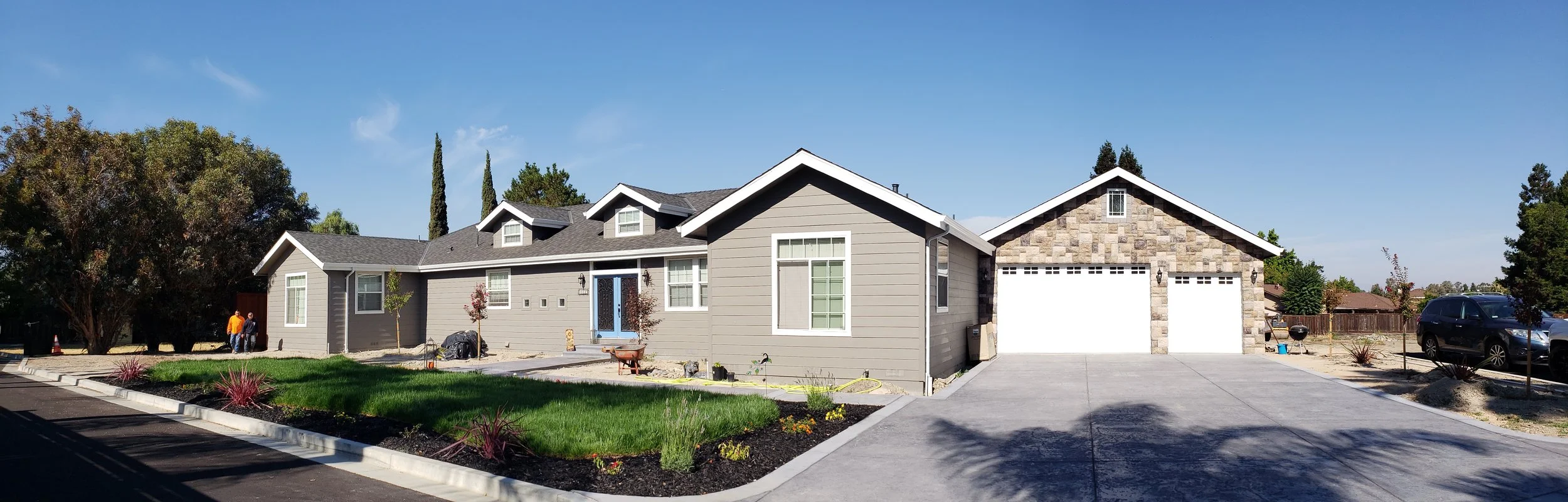
What are the financing options available for purchasing a modular home?
What are the financing options available for purchasing a modular home?
There are about as many financing options for building a modular home with a construction loan as there are building a site-built home. That said, our homes have better cost controls in place and there is less risk for the bank.
🌼 Friendly Guide: Financing Options for Your Modular Home
Buying a modular home should feel exciting — not overwhelming. The good news is that financing a modular home is very similar to financing a traditional site‑built home, as long as the home is built to residential codes and placed on a permanent foundation. Here’s a simple, friendly breakdown of the most common options.
🌟 Popular Financing Paths
Each option below starts with a Guided Link so visitors can learn more with one click.
Conventional mortgages — Many modular homes qualify for standard 15‑ or 30‑year mortgages. Once the home is titled as real property, it can be financed just like any other house.
FHA loans — FHA programs can be a great fit for buyers who want flexible credit requirements and lower down payments. Modular homes that meet FHA standards often qualify.
VA loans — Eligible veterans and service members can use VA benefits to finance modular homes, often with no down payment and competitive terms.
USDA rural loans — If your new home is in a qualifying rural area, USDA loans may offer low or even zero down payment options.
Construction‑to‑permanent loans — Perfect for modular homes that require on‑site assembly or foundation work. This loan covers construction and then automatically converts into a long‑term mortgage once the home is complete.
Specialty or chattel loans — These apply mainly to HUD‑code manufactured homes, not modular homes. It’s important to confirm whether your home is classified as modular (real property) or manufactured (personal property), because the financing options differ.
In‑house financing & local lenders — Some builders and local banks offer financing packages that combine land and home costs. These can be convenient options to compare alongside traditional lenders.
🌱 Simple Steps to Get the Best Financing
Confirm the home’s classification Make sure your home will be titled as real property and placed on a permanent foundation. This unlocks the widest range of loan programs.
Ask about construction‑to‑perm options If your lender needs to fund the build and installation, this loan type keeps everything streamlined.
Compare lenders Look at quotes from banks, credit unions, mortgage lenders, and any builder‑offered financing. Comparing rates and terms helps you find the best fit.
Review program details Ask about down payment requirements, interest rates, loan‑to‑value limits, appraisal steps, and any builder or manufacturer approvals needed.
Here are a few lenders that you can talk to:
Lender 1:
Rajesh Bhavnani
VP of Originations
NMLS # 2513002
Direct: (424) 484-9978
Office: (877) 885-0111
2824 So. Robertson Blvd.
Los Angeles, CA 90034
Specializing in vacant land “Lot Loans” and Modular “Construction Loans”.
Lender 2:
Mortgage Loan Originator
NMLS # 256946
Mobile: (619) 954-7816
Office: (858) 429-4654
3838 Camino Del Rio North, Suite 305,
San Diego, CA 92108
Lender 3:
Ricardo Ramos
NMLS 259643
Non producing Branch Manager
Supreme Lending
2936 Hilltop Mall Rd Richmond Ca
(510) 501-5185
(800) 600-6326
Steps to Build a Modular Home in California
Check out our FAQ page read more in-depth answers to the most commonly asked questions about modular homes.
Step 1:
Secure Land
Having a property is usually the first step in building your dream home.
Without land, it is hard to choose a home model or determine what the balance of your budget for building is.
Step 2:
Modular Feasibility Study
This is where one of us comes out to meet you at the property and determine what size modules can be delivered.
There is a fee for this service but it’s a credit on the price of the home.
Step 3:
Choose Home Model
We now know what size modules can be delivered. You can choose a home model that meets your requirements. Start with the smallest one you will consider and work your way up to your dream home.
More detailed info about building California
Check out our Modular Steps to Building page for more detailed information about building a modular home throughout the state of California.
Step 4:
Working on Plans
This is where you start working with us on the plans for your Factory Built Home (Modular).
There are costs involved in the modular home plans but they are a credit on the price of the home.
Step 5:
On-Site Pans
You will needs some plans for the on-site portion of the project:
Topographical Survey
Civil Engineered Site Plans
Soils Report
Foundation Plans, etc.
Step 6:
Permitting
Now that your plans are completed it is time for submission. We have an Optional Permitting Service or we can introduce you to someone to help you.
Expect plan check revisions, rarely do plans get approved on the first or second submission.
Home Floor Plans & Pictures to Review
Take a look at hundreds and hundreds of images and floor plans of our homes. Your home can look exactly how you want it, you are only limited by your imagination & budget.
Step 7:
Contractor Interviews
We do know a few General Building Contractors that we can introduce you to. They are familiar with modular home and can certainly help you.
Sometimes though you may have a qualified local contractor you’d like to work with, this is also your decision to make.
This is one of the most exciting parts of building a modular home. You get to see all of your hard work being delivered to your property.
You get to sit back, take pictures, and watch the show.
Then you get to walk through your house!!!
Step 8:
Modular Home Delivery & Set
Step 9:
Completion of Modular
Your General Contractor will work to secure the modules to the foundation, connect the cross-overs, finish whatever on-site work there is, etc..
From there, the City/County will review and provide your Certificate of Occupancy. Time to move into your dream home!
Congratulations!!!
Map Addresses Are Intentionally Approximate to Protect the Privacy of our Clients.