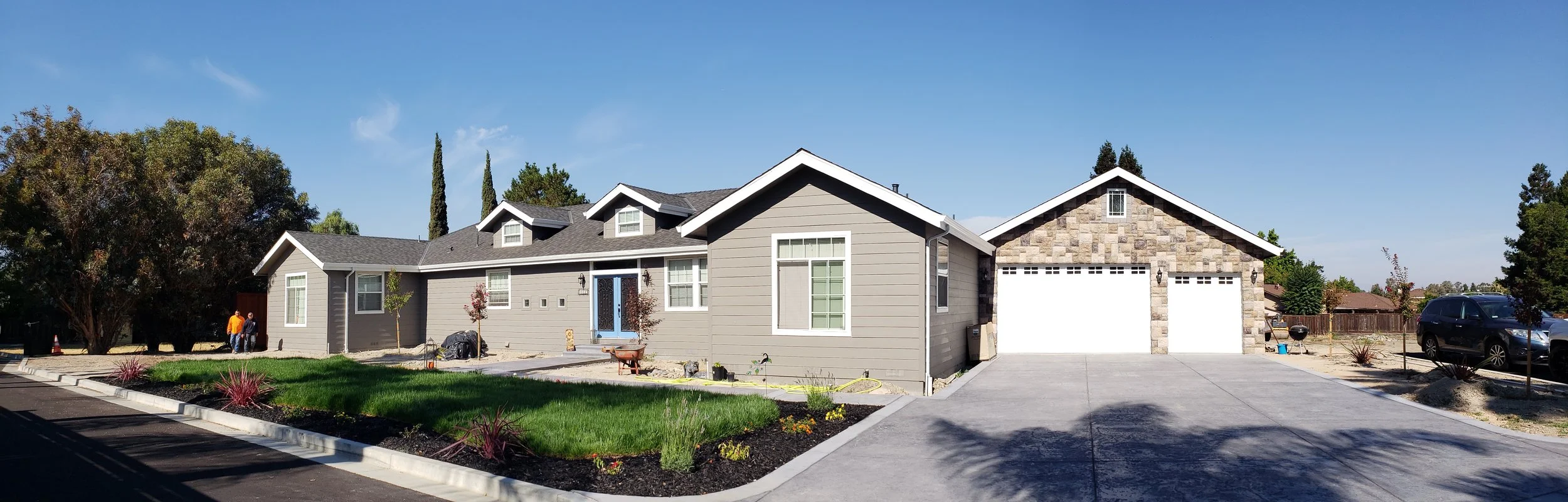
What are the financing options available for purchasing a modular home?
What are the financing options available for purchasing a modular home?
Financing for modular homes generally falls into conventional mortgage lending and construction lending, with product availability shaped by how the completed home is legally classified. Loans are typically underwritten and appraised similarly to site-built housing when the home is permanently affixed to a foundation and titled as real property; when the home is treated as personal property (we don’t sell Manufactured homes so this doesn’t apply to our homes), different loan types and terms may apply. Total project financing may also need to cover land acquisition, site work (e.g., foundation and utilities), module transport and set, and permitting and soft costs.
· Conventional mortgage: Commonly used when the home is placed on a permanent foundation and titled as real property; terms will be similar to other residential mortgages.
· FHA, VA, and USDA programs: Government-insured or government-guaranteed mortgage programs that may be available for modular homes that meet program eligibility criteria, property standards, and appraisal requirements.
· Construction-to-permanent (single-close) loan: A loan structure that funds construction-related costs and then converts to a long-term mortgage after the home is completed and set, typically with one closing.
· Two-close construction loan: Interim construction financing followed by a separate permanent mortgage after completion; closing costs and underwriting may occur twice, depending on lender structure.
· Other funding sources: Projects may also use land (lot) loans, home equity products (e.g., home equity loans or HELOCs), unsecured personal loans, or seller/owner financing, depending on borrower qualifications and transaction structure.
Additional considerations
· Property classification (real property versus personal property) and foundation type can affect eligible loan programs, appraisal methodology, and future resale financing. Modular is the way to go, this makes sure you get the best value and best rates.
· Project sequencing including permitting, site preparation, module delivery, and set can influence loan structure, draw schedules, and the duration of interim financing.
· Lender familiarity with modular construction varies, including how valuations are performed and how construction draws are administered.
In practice, modular-home projects are often financed in phases. A borrower may finance land acquisition separately (including through a land or lot loan), fund early predevelopment costs such as design, engineering, and permitting through cash or other sources, and then obtain construction financing once a budget, contractor scope, and permit status support underwriting; upon completion and set, the financing may convert to (or be replaced by) a permanent mortgage, depending on the loan structure.
· Land acquisition: purchase funded with cash or financed through a land/lot loan, depending on borrower qualifications and lender policy.
· Predevelopment: design, engineering, and permitting costs funded through cash, home equity products (where available), or other financing sources.
· Construction and set: construction financing closed once scope, budget, and permits are sufficiently defined; funds are typically disbursed in draws tied to milestones, with conversion to permanent financing depending on loan type.
Steps to Build a Modular Home in California
Check out our FAQ page read more in-depth answers to the most commonly asked questions about modular homes.
Step 1:
Secure Land
Having a property is usually the first step in building your dream home.
Without land, it is hard to choose a home model or determine what the balance of your budget for building is.
Step 2:
Modular Feasibility Study
This is where one of us comes out to meet you at the property and determine what size modules can be delivered.
There is a fee for this service but it’s a credit on the price of the home.
Step 3:
Choose Home Model
We now know what size modules can be delivered. You can choose a home model that meets your requirements. Start with the smallest one you will consider and work your way up to your dream home.
More detailed info about building California
Check out our Modular Steps to Building page for more detailed information about building a modular home throughout the state of California.
Step 4:
Working on Plans
This is where you start working with us on the plans for your Factory Built Home (Modular).
There are costs involved in the modular home plans but they are a credit on the price of the home.
Step 5:
On-Site Pans
You will needs some plans for the on-site portion of the project:
Topographical Survey
Civil Engineered Site Plans
Soils Report
Foundation Plans, etc.
Step 6:
Permitting
Now that your plans are completed it is time for submission. We have an Optional Permitting Service or we can introduce you to someone to help you.
Expect plan check revisions, rarely do plans get approved on the first or second submission.
Home Floor Plans & Pictures to Review
Take a look at hundreds and hundreds of images and floor plans of our homes. Your home can look exactly how you want it, you are only limited by your imagination & budget.
Step 7:
Contractor Interviews
We do know a few General Building Contractors that we can introduce you to. They are familiar with modular home and can certainly help you.
Sometimes though you may have a qualified local contractor you’d like to work with, this is also your decision to make.
This is one of the most exciting parts of building a modular home. You get to see all of your hard work being delivered to your property.
You get to sit back, take pictures, and watch the show.
Then you get to walk through your house!!!
Step 8:
Modular Home Delivery & Set
Step 9:
Completion of Modular
Your General Contractor will work to secure the modules to the foundation, connect the cross-overs, finish whatever on-site work there is, etc..
From there, the City/County will review and provide your Certificate of Occupancy. Time to move into your dream home!
Congratulations!!!
Map Addresses Are Intentionally Approximate to Protect the Privacy of our Clients.