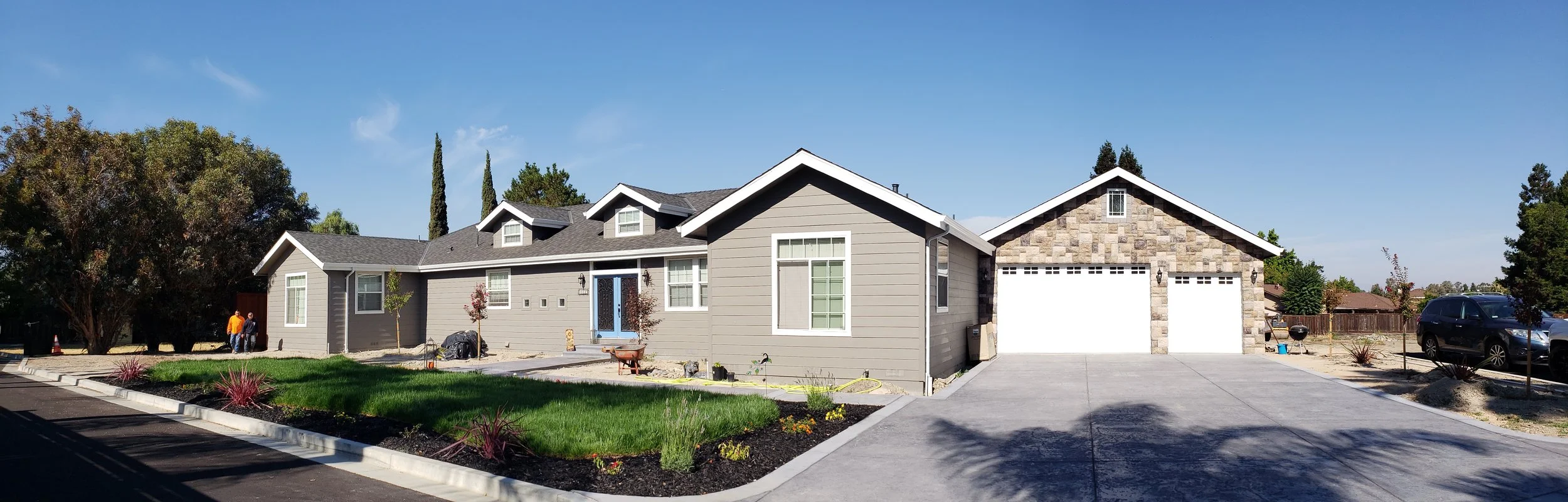
What are the financing options available for purchasing a modular home?
What are the financing options available for purchasing a modular home?
There are about as many financing options for building a modular home with a construction loan as there are building a site-built home. That said, our homes have better cost controls in place and there is less risk for the bank.
Yes — you usually have several good options when it comes to financing a modular home. If the home will sit on a permanent foundation and be treated as real property, you can often use the same types of loans people use for traditional site-built homes. Here’s a simple, easy-to-follow look at the most common choices and what they’re best for.
· Conventional mortgage — If your modular home will be permanently attached to a foundation and classified as real property, there’s a good chance you can finance it with a standard 15- or 30-year mortgage, just like a traditional home. For many buyers, this is the most straightforward and familiar option.
· FHA, VA, and USDA loans — These government-backed loans may also work for modular homes if the property meets program requirements. They can be especially worth exploring if you want a lower down payment, qualify through military service, or are buying in an eligible rural area.
· Construction-to-permanent (single-close) loan — This option can cover the factory build, site work, and the finished home all in one loan. When construction is complete, it turns into a regular mortgage, which can make the whole process feel simpler and cut down on extra closings and paperwork.
· Two-close construction loan — With this setup, you use one loan for the construction phase and then a second loan for the permanent mortgage once the home is finished. It can be a good fit if you want more flexibility or expect your financing terms to improve by the time construction wraps up.
· Other ways to cover the extra costs — Depending on your situation, you might also use home equity, a HELOC, a personal loan, or seller financing to help pay for land, site work, or other parts of the project. These can be helpful if your main loan doesn’t cover every expense.
A few helpful tips:
· When you talk to lenders, ask whether they offer construction-to-permanent, single-close loans. In some cases, that can save you time, reduce paperwork, and help you avoid paying for two separate closings.
· It’s also smart to compare lenders who already have experience with modular or prefab homes, since not every lender handles construction financing or modular appraisals the same way.
The process does vary on whether or not you own land, need to get a “Lot Loan” or if you have the land and need a construction loan, where you are on your plans and permits, etc. For an ADU, most people either get a home equity line of credit or pay cash. Then, probably half of our clients building a new single family residence are either paying cash or from insurance funds, the other half gets a Construction Loan once the permits are about to be issued.
Here are a few lenders that you can talk to:
Rajesh Bhavnani
VP of Originations
NMLS # 2513002
Direct: (424) 484-9978
Office: (877) 885-0111
2824 So. Robertson Blvd.
Los Angeles, CA 90034
Specializing in vacant land “Lot Loans” and Modular “Construction Loans”.
or
Mortgage Loan Originator
NMLS # 256946
Mobile: (619) 954-7816
Office: (858) 429-4654
3838 Camino Del Rio North, Suite 305,
San Diego, CA 92108
or
Ricardo Ramos
NMLS 259643
Non producing Branch Manager
Supreme Lending
2936 Hilltop Mall Rd Richmond Ca
(510) 501-5185
(800) 600-6326
Steps to Build a Modular Home in California
Check out our FAQ page read more in-depth answers to the most commonly asked questions about modular homes.
Step 1:
Secure Land
Having a property is usually the first step in building your dream home.
Without land, it is hard to choose a home model or determine what the balance of your budget for building is.
Step 2:
Modular Feasibility Study
This is where one of us comes out to meet you at the property and determine what size modules can be delivered.
There is a fee for this service but it’s a credit on the price of the home.
Step 3:
Choose Home Model
We now know what size modules can be delivered. You can choose a home model that meets your requirements. Start with the smallest one you will consider and work your way up to your dream home.
More detailed info about building California
Check out our Modular Steps to Building page for more detailed information about building a modular home throughout the state of California.
Step 4:
Working on Plans
This is where you start working with us on the plans for your Factory Built Home (Modular).
There are costs involved in the modular home plans but they are a credit on the price of the home.
Step 5:
On-Site Pans
You will needs some plans for the on-site portion of the project:
Topographical Survey
Civil Engineered Site Plans
Soils Report
Foundation Plans, etc.
Step 6:
Permitting
Now that your plans are completed it is time for submission. We have an Optional Permitting Service or we can introduce you to someone to help you.
Expect plan check revisions, rarely do plans get approved on the first or second submission.
Home Floor Plans & Pictures to Review
Take a look at hundreds and hundreds of images and floor plans of our homes. Your home can look exactly how you want it, you are only limited by your imagination & budget.
Step 7:
Contractor Interviews
We do know a few General Building Contractors that we can introduce you to. They are familiar with modular home and can certainly help you.
Sometimes though you may have a qualified local contractor you’d like to work with, this is also your decision to make.
This is one of the most exciting parts of building a modular home. You get to see all of your hard work being delivered to your property.
You get to sit back, take pictures, and watch the show.
Then you get to walk through your house!!!
Step 8:
Modular Home Delivery & Set
Step 9:
Completion of Modular
Your General Contractor will work to secure the modules to the foundation, connect the cross-overs, finish whatever on-site work there is, etc..
From there, the City/County will review and provide your Certificate of Occupancy. Time to move into your dream home!
Congratulations!!!
Map Addresses Are Intentionally Approximate to Protect the Privacy of our Clients.